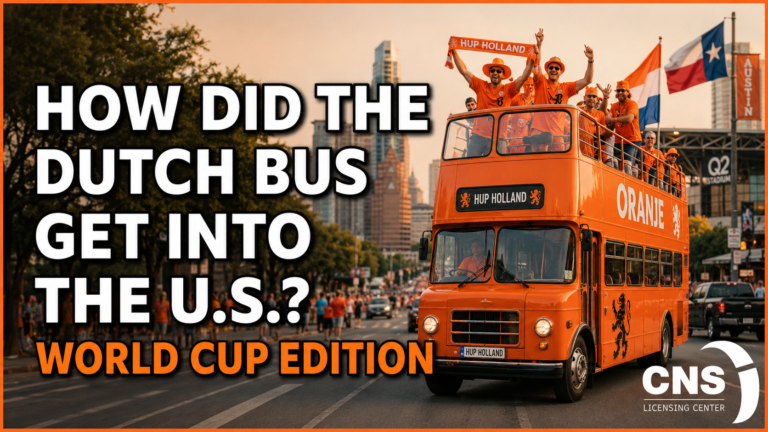
When the FIFA World Cup came to Texas, Dutch fans did not just bring orange shirts, chants, flags, and matchday energy. They brought an entire double-decker bus.
The famous Dutch “Oranje Bus” has become a rolling symbol of Netherlands soccer culture. Painted bright orange and followed by thousands of fans during pre-match fan walks, the bus has appeared at major international tournaments around the world. For the 2026 World Cup, it made its way across the Atlantic by ship, arriving in Texas before joining Dutch supporters in cities like Arlington and Houston.
For fans, it is a fun story about national pride.
For anyone in transportation, licensing, or passenger operations, it raises a bigger question:
How does a foreign bus legally come into the United States, travel on U.S. roads, and participate in a major public event?
The answer likely involves several layers of compliance, including customs entry, temporary vehicle import rules, insurance, registration, operating authority, routing, and event coordination.
A Bus Can Visit the U.S., But It Still Has to Clear the Right Agencies
Bringing a foreign vehicle into the United States is not as simple as unloading it from a ship and driving away.
Vehicles imported into the U.S. may be subject to requirements from multiple agencies, including:
- U.S. Customs and Border Protection
- U.S. Environmental Protection Agency
- National Highway Traffic Safety Administration
- Federal Motor Carrier Safety Administration
- State and local transportation agencies
- Port authorities
- Insurance providers
- Event and law enforcement coordinators
A vehicle like the Oranje Bus may be treated differently depending on why it is entering the country, how long it will stay, who owns it, whether passengers are being transported, and whether anyone is being compensated for the transportation.
That distinction matters.
A privately owned fan vehicle temporarily visiting the United States is one thing. A passenger carrier transporting people for hire is another.
Temporary Importation Is Often the Starting Point
Foreign vehicles that enter the United States for a limited period may qualify for temporary import treatment. This generally means the vehicle is allowed into the country for a specific purpose and must be exported again within the required timeframe.
For a specialty vehicle like the Oranje Bus, organizers would likely need to show documentation such as foreign registration, ownership information, shipping documents, customs paperwork, and proof that the vehicle is not being permanently imported for regular U.S. operation.
Temporary importation can also involve federal safety and emissions questions. The vehicle may not have been built to U.S. Federal Motor Vehicle Safety Standards or U.S. emissions certification standards. That does not always prevent a temporary visit, but it does mean the importer needs to use the correct entry process and avoid treating the vehicle like a standard U.S.-registered commercial bus.
In short: the bus may be here for the party, but the paperwork has to arrive first.
Passenger Use Changes the Compliance Picture
The most important licensing question is whether the bus is simply part of a fan parade or whether it is being used to transport passengers as a motor carrier.
If the vehicle is being operated as a display vehicle, parade vehicle, promotional vehicle, or privately used fan vehicle, the compliance requirements may be different than if it is being used to carry passengers for compensation.
But if an operator provides passenger transportation for compensation in interstate or foreign commerce, FMCSA passenger carrier rules may apply. That can include operating authority, insurance filings, driver qualification requirements, vehicle inspection and maintenance obligations, hours-of-service rules, and other safety regulations.
Compensation does not always mean riders hand cash to the driver. FMCSA can look at direct or indirect compensation, sponsorships, package deals, event transportation, or transportation included as part of a paid service.
That is why passenger carriers, tour operators, event organizers, and specialty vehicle owners should never assume that “temporary,” “private,” or “promotional” automatically means “exempt.”
Insurance Is a Major Piece of the Puzzle
A double-decker bus operating on U.S. roads presents obvious insurance questions.
- Who owns it?
- Who is driving it?
- Is it carrying passengers?
- Is it crossing state lines?
- Is it part of a public event?
- Is it being used for compensation?
- Does the policy cover U.S. operations?
For-hire passenger carriers operating in interstate or foreign commerce are subject to minimum financial responsibility requirements. For larger passenger vehicles, those requirements can be significant. Even when a vehicle is not operating for hire, organizers still need appropriate liability coverage, especially if the vehicle is part of a public fan event involving crowds, road closures, or escorted routes.
Insurance is often one of the first items that port authorities, event organizers, venues, cities, and law enforcement agencies want confirmed.
State and Local Coordination Still Matters
Getting through federal import and customs requirements does not automatically authorize a vehicle to operate anywhere, anytime.
Once a vehicle is on U.S. soil, state and local requirements can come into play. Depending on the operation, that may include:
- Temporary registration or recognition of foreign registration
- Proof of insurance
- Oversize or specialty vehicle restrictions
- Local parade or event permits
- Police escort requirements
- Route approvals
- Parking and staging permissions
- City street closure coordination
- Venue access rules
The Oranje Bus appearing in Texas during World Cup events was not just a transportation move. It was part of a coordinated public event involving thousands of fans. That type of operation requires planning well beyond the vehicle itself.
The Compliance Lesson for U.S. Operators
Most carriers are not trying to ship a bright orange double-decker fan bus across the Atlantic.
But the same compliance principles apply to many real-world situations, including:
- Foreign vehicles entering the U.S. for events
- Motorcoaches used for special tours
- Promotional buses and branded vehicles
- International sports or entertainment tours
- Private buses converted for travel
- Passenger transportation connected to ticketed events
- Specialty vehicles moving between states
- Temporary vehicle imports for shows, displays, or demonstrations
Before a vehicle crosses a border or carries passengers, the operator needs to answer several questions:
- Is the vehicle being temporarily or permanently imported?
- Does it meet, or is it exempt from, applicable DOT and EPA requirements?
- Is it being used privately, promotionally, or commercially?
- Will passengers be transported for compensation?
- Is FMCSA operating authority required?
- Is the correct insurance coverage in place?
- Are state, local, port, and event permits required?
- Are the driver and vehicle compliant for the intended operation?
- Is there a plan to export the vehicle when its U.S. visit is over?
Those details can determine whether a unique vehicle experience becomes a smooth event success or a compliance problem.
Fun Vehicles Still Need Serious Paperwork
The Dutch Oranje Bus is a great World Cup story because it shows how transportation can become part of a cultural celebration. It is colorful, memorable, and instantly recognizable.
But behind the fun is a serious reminder: vehicles that cross borders and operate on U.S. roads must be handled correctly.
Whether you are moving a commercial bus, bringing in a specialty vehicle, launching a passenger service, or coordinating transportation for a major event, licensing and compliance should be part of the plan from the beginning.
CNS Licensing helps transportation companies understand the requirements that come with operating across jurisdictions, registering vehicles, obtaining authority, and staying compliant as their operations grow.
Before your next vehicle move, event, or passenger operation, make sure the paperwork is ready before the wheels start turning.