
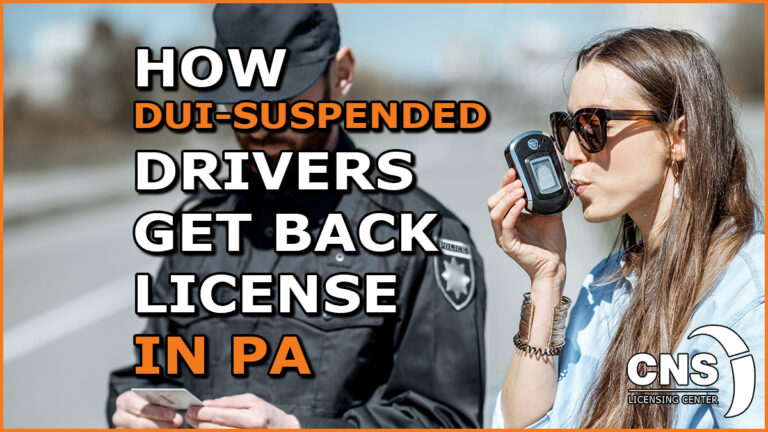
Pennsylvania is preparing to overhaul its ignition interlock system and the changes could affect thousands of drivers, employers and vehicle owners across the Commonwealth.
House Bill 1862 would replace the state’s current ignition interlock limited and restricted licenses with a new, unified Ignition Interlock Driver’s License, or IIDL. For eligible drivers, the new license could provide a clearer path to legally drive an approved vehicle equipped with an ignition interlock device while serving a DUI or chemical-test-refusal-related suspension.
But the bill goes far beyond changing the name of a license. It would:
- establish new application timelines
- allow certain applications to be completed online
- clarify how drivers receive credit toward their required interlock period, and
- create a limited employment exemption for some employer-owned vehicles
HB 1862 has passed both chambers of the Pennsylvania General Assembly and is now awaiting action by the Governor. Here is who the proposed Ignition Interlock Driver’s License would apply to, what drivers would need to do and why employers and vehicle owners should pay attention.
What would Pennsylvania HB 1862 do?
HB 1862 has two major components:
- It would replace Pennsylvania’s current ignition interlock license structure with a single Ignition Interlock Driver’s License, commonly called an IIDL.
- It would allow qualifying private parking lot operators to obtain limited vehicle registration information from PennDOT to mail invoices for unpaid parking charges.
The ignition interlock changes are intended to create a more uniform process for drivers, PennDOT and approved ignition interlock vendors.
The bill would not eliminate DUI suspensions or allow unrestricted driving. A person holding an IIDL would still be under suspension and would generally be permitted to drive only in accordance with the license’s restrictions.
What Is an Ignition Interlock Driver’s License?
The proposed Ignition Interlock Driver’s License would authorize an eligible person to drive a properly registered and insured vehicle equipped with an approved ignition interlock device.
An ignition interlock device requires the driver to provide a breath sample before the vehicle will start or operate. Under the bill, an approved device would prevent operation unless the breath sample shows an alcohol level below 0.025%.
The IIDL would be clearly marked with an ignition interlock designation. The driver’s underlying operating privilege would remain suspended, except when the person was operating an approved vehicle in compliance with the IIDL.
PennDOT would also enter a “T” restriction code on the person’s driving record to show that the driver has permission to operate an ignition-interlock-equipped vehicle. The legislation would require PennDOT to coordinate that restriction information with law enforcement systems.
Who Would Qualify for the New IIDL?
Eligibility would generally include people whose noncommercial driving privileges were suspended because of:
- A DUI conviction or adjudication
- A substantially similar DUI offense in another state
- Refusal to submit to qualifying chemical testing
- Admission into Accelerated Rehabilitative Disposition, or ARD
- Admission into certain preadjudication programs
- A qualifying consent decree
- Participation in a certified treatment court program
A person could generally become eligible after receiving notice of a qualifying suspension from PennDOT. However, additional suspensions received before the IIDL is issued could make the person ineligible.
People participating in a treatment court certified by the Administrative Office of Pennsylvania Courts could also qualify. The court would be responsible for notifying PennDOT of the person’s participation and any changes to that participation.
What about first-time offenders and ARD participants?
The bill preserves exceptions for certain people who:
- Are subject to qualifying first-offense penalties and have no prior offense
- Are subject to an ARD-related suspension
- Have no prior offense and certify that they do not intend to operate a vehicle during the ignition interlock period
Some people may therefore be exempt from a mandatory ignition interlock restoration requirement while still having the option to apply for an IIDL during their suspension.
Eligibility would depend on the exact offense, prior record, suspension and PennDOT restoration requirements.
When Could a Driver Apply?
An eligible person could generally apply for an IIDL no sooner than 30 days after the applicable:
- Conviction
- Adjudication of delinquency
- Admission into ARD
- Admission into a preadjudication program
- Consent decree
- Report of chemical-test refusal
The application would have to include the required fees, insurance documentation, vehicle information and proof that an approved ignition interlock device was installed in each vehicle the person intended to operate.
Applicants would also generally need to surrender their current driver’s license. A person whose license was lost, stolen or expired would have to complete the appropriate replacement or renewal process.
How Could Someone Apply for an IIDL?
Once PennDOT’s required systems are operational, the bill would allow applications to be submitted:
- Through a PennDOT online portal
- By certified mail
- At selected PennDOT Driver License Centers
Applying at a participating Driver License Center would carry an additional $11 fee, subject to future statutory adjustment.
When someone applies online or by certified mail and satisfies the requirements, PennDOT would generally have to issue a camera card within 14 days. PennDOT could instead use the applicant’s existing photograph when the person has an unexpired license.
Would Every Vehicle Owned by the Driver Need an Interlock?
Not necessarily.
The proposed law says PennDOT or an ignition interlock vendor could not automatically require the device to be installed on every vehicle owned, registered or insured by an applicant. The requirement would generally apply to vehicles the person intends to operate.
Applicants would have to self-certify the vehicles they plan to drive and provide proof of financial responsibility for each one.
This change could be especially important for households with multiple vehicles. However, the IIDL holder would still be prohibited from driving a vehicle that is not properly authorized and equipped with a functioning device.
How Long Would the Ignition Interlock Requirement Last?
Depending on the offense and suspension, a person could be subject to an ignition interlock period of one year or 18 months.
Time during which the person holds a valid IIDL would count toward the applicable mandatory interlock requirement.
The bill would also address situations in which a person receives both a DUI suspension and a chemical-test-refusal suspension from the same incident. Instead of requiring two separate ignition interlock periods, the person would generally serve one applicable one-year or 18-month term.
Can Someone Drive While the IIDL Application Is Pending?
The bill creates a narrow procedure for traveling to an ignition interlock installation appointment.
When proof of installation is required for the IIDL application, a suspended driver could operate one vehicle directly:
- From the person’s residence to the installation location
- From the installation location back to the residence
The driver would have to carry proof of the appointment or installation and provide it to a police officer upon request. Driving anywhere else under this provision could result in additional penalties.
Would Employees Be Allowed to Drive an Employer’s Vehicle?
HB 1862 includes a limited employment exemption.
A person with an IIDL could potentially drive an employer-owned vehicle without an ignition interlock device when driving is required within the course and scope of employment.
To use the exemption:
- The employer must be notified of the employee’s ignition interlock requirement.
- The employee must carry proof of the notification while driving.
- The employer’s acknowledgment must include a notarized signature on a PennDOT form and a contact telephone number.
The exemption would not apply when:
- The employer-owned vehicle is available to the employee for personal use.
- The vehicle is owned by a business wholly or partially owned or controlled by the restricted driver.
- The vehicle is a school bus or school vehicle.
- The vehicle is designed to transport more than 15 passengers, including the driver.
The detailed notification and notarization requirements mean employers should not rely on a verbal conversation or informal letter.
Employers should also review applicable insurance requirements and company driving policies before authorizing an employee to operate a company vehicle.
Can an IIDL Be Used to Drive a Commercial Motor Vehicle?
No. HB 1862 specifically prohibits PennDOT from issuing an Ignition Interlock Driver’s License for the purpose of operating a commercial motor vehicle.
The employer-owned vehicle exemption does not override this prohibition.
A CDL holder might qualify for an IIDL to operate an eligible noncommercial vehicle, but the license would not authorize the person to operate a tractor-trailer, bus or other vehicle requiring commercial driving privileges.
This distinction is especially important for:
- CDL holders
- Trucking companies
- School transportation providers
- Passenger carriers
- Employers with regulated commercial vehicles
Separate federal and Pennsylvania CDL disqualification rules would continue to apply.
What Must Happen Before the Device Can Be Removed?
Finishing the required one-year or 18-month period would not automatically remove the restriction.
PennDOT would need a declaration of compliance from the person’s ignition interlock vendor. For most participants, the vendor would have to certify that the following did not occur during the preceding 60 days:
- An attempt to start the vehicle with a breath alcohol concentration of 0.08% or higher, unless followed within 10 minutes by a reading below 0.08%
- Failure to take or pass a required retest
- Failure to report to the vendor for required maintenance, repair, calibration, inspection, monitoring or replacement
Certain ARD-related cases may have a 30-day compliance period.
When a disqualifying event occurs during the applicable period, the ignition interlock requirement would continue until the person completes another incident-free compliance period.
What Happens If the Driver Receives Another Suspension?
An IIDL could be recalled if PennDOT receives notice of another offense that results in:
- Cancellation
- Disqualification
- Recall
- Suspension
- Revocation
The person would have to surrender the IIDL. After completing the new penalty, the driver would still have to finish the remaining portion of the original ignition interlock requirement before receiving an unrestricted replacement license.
When Would HB 1862 Take Effect?
The changes would not all begin on the same date.
If the Governor signs HB 1862:
- Certain DUI grading, penalty and transitional provisions would take effect immediately.
- Most ignition interlock licensing changes would take effect in 16 months.
- Private parking lot record-access provisions would take effect in 21 months.
- The full online ignition interlock services provision would take effect in 38 months.
These delayed effective dates would give PennDOT time to create applications, update records, develop technology, issue forms and coordinate with ignition interlock vendors.
Need Help Understanding a PennDOT Notice?
PennDOT licensing and restoration requirements can vary based on the underlying offense, prior record, type of suspension and class of license involved.
CNS Licensing helps Pennsylvania drivers understand PennDOT documents, complete qualifying driver-service transactions and determine which forms or next steps may be required.
Call 717-625-7355 or email info@cnslicensing.com.
This article is provided for general informational purposes and is not legal advice. HB 1862 had not yet become law at the time of publication, and final PennDOT procedures may depend on the Governor’s action, regulations, forms and implementation guidance.