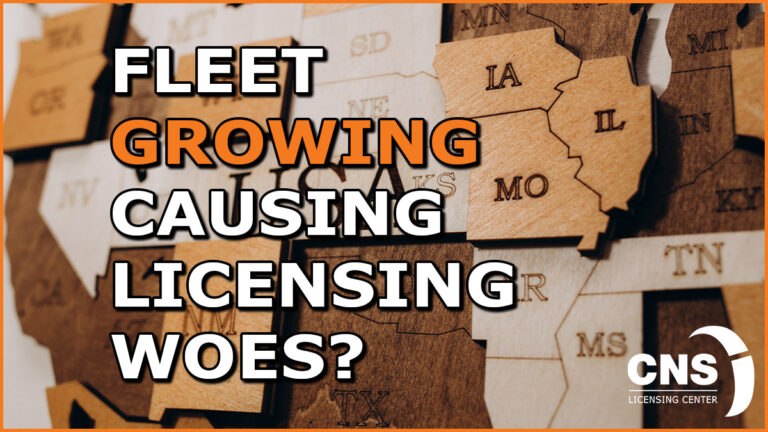
For a fleet operating in one state, registration is usually straightforward. For a fleet operating across multiple states, every decision can create ripple effects.
For many growing fleets, vehicle registration starts as a simple administrative task. A company buys vehicles, registers them in its home state, keeps up with renewals, and handles inspections as they come due.
But once a fleet expands across multiple states, that simple system can become expensive, inefficient, and difficult to manage.
For example:
- Imagine a regional service company with vehicles operating throughout the Mid-Atlantic, Southeast, and parts of the Midwest.
- The company’s fleet includes a mix of pickup trucks, service bodies, utility trucks, and a small number of heavier commercial vehicles. Some units are based near the company’s headquarters, while others are assigned to satellite locations, long-term job sites, or remote field crews.
- Over time, the fleet has grown to more than 150 commercial vehicles operating in several states. Most of the light- and medium-duty vehicles are still registered in the company’s original home state, but many of those vehicles rarely return there.
- Meanwhile, a small portion of the fleet requires apportioned registration because of its size, weight, and interstate use.
The company’s leadership begins asking an important question: Is our current registration setup still the right fit for how our fleet actually operates?
That is where CNS Licensing can help.
The Problem: Registration Decisions Get Complicated Fast
For a fleet operating in one state, registration is usually straightforward. For a fleet operating across multiple states, every decision can create ripple effects.
Before changing where vehicles are titled or registered, a fleet needs to answer several important questions:
- Which state is actually the best fit for the fleet’s operation?
- Does the company have a legitimate business presence in that state?
- Is a registered agent enough, or is more required?
- How will title transfers and registration changes be handled at scale?
- Could states where the vehicles operate challenge the out-of-state registration?
- How will the change affect DOT compliance, insurance, taxes, inspections, renewals, and recordkeeping?
- Are any vehicles better suited for IRP apportioned registration instead?
Choosing a state based only on one requirement, such as inspection frequency or renewal convenience, can create problems if the broader compliance picture is not reviewed first.
Why “Just Register It Somewhere Else” Is Not a Strategy
Some fleets assume that if another state appears to have fewer administrative burdens, they can simply move their vehicle registrations there.
In reality, state registration rules, business presence requirements, vehicle use, operating locations, weight ratings, tax obligations, insurance filings, and DOT regulations all need to be reviewed together.
A registered agent may be part of the solution in some cases, but it does not automatically create a legitimate registration strategy. Depending on the state and the type of vehicle, the fleet may need to demonstrate a valid business connection, physical presence, operating records, or other documentation.
For larger fleets, this becomes even more important. Moving dozens or hundreds of titles and registrations is not just paperwork. It is a compliance project.
How CNS Licensing Helps Fleets Evaluate the Right Path
CNS Licensing helps fleets step back and look at the full picture before making a major registration change.
Our team can help review:
- Current vehicle registration states
- Vehicle types, weights, and usage
- IRP and non-IRP units
- Operating footprint by state
- Inspection and emissions obligations
- Business presence and registered agent considerations
- Title transfer requirements
- State-specific registration risks
- Renewal timelines
- Plate, cab card, and credential needs
- Potential conflicts with DOT, insurance, or tax requirements
The goal is not to find a shortcut. The goal is to build a registration structure that supports the way the fleet actually operates.
Support for Light- and Medium-Duty Commercial Fleets
Many companies operate large fleets of pickups, service trucks, utility trucks, box trucks, vans, and other light- or medium-duty commercial vehicles that do not always fit neatly into one registration category.
These vehicles may not be traditional tractor-trailers, but they can still trigger commercial registration, DOT, inspection, insurance, and state-specific compliance obligations.
CNS Licensing helps fleets determine whether their vehicles should remain state-registered, move to another state, be included in an apportioned registration structure, or be handled through a different licensing strategy.
That review is especially valuable for companies with vehicles spread across multiple branches, job sites, terminals, or service regions.
Managing Large-Scale Title and Registration Projects
Once the strategy is confirmed, CNS Licensing can also help execute the project.
For fleets with dozens or hundreds of vehicles, we can assist with:
- Title transfer coordination
- Registration applications
- Plate changes
- State forms and documentation
- Power of attorney requirements
- Fleet vehicle data organization
- Renewal tracking
- Communication with state agencies
- IRP support for apportioned units
- Follow-up on rejected, delayed, or incomplete transactions
Large registration projects require organization, accuracy, and persistence. A missing signature, incorrect weight, outdated title, lienholder issue, or incomplete document can delay the entire process.
CNS Licensing helps reduce that burden so fleet managers can stay focused on operations.
Identifying States That May Challenge Out-of-State Registrations
One of the biggest concerns for multi-state fleets is whether a vehicle registered in one state may be challenged while operating in another.
That risk can depend on several factors, including where the vehicle is garaged, where it is primarily operated, where the business is located, whether the vehicle crosses state lines, whether it is used intrastate, and whether the company has terminals, employees, or customers in that state.
CNS Licensing can help fleets identify potential red flags before they become roadside, audit, or renewal problems.
This is especially important for companies that operate vehicles in multiple states but have a headquarters, dispatch office, maintenance yard, satellite branch, or primary business presence in one state.
Licensing and DOT Compliance Should Work Together
Vehicle registration is only one part of compliance.
A fleet’s licensing strategy should also align with its broader DOT compliance program, including:
- USDOT and operating authority records
- MCS-150 updates
- Driver qualification files
- Vehicle maintenance files
- Annual inspections
- Drug and alcohol testing requirements
- Hours-of-service requirements
- Insurance filings
- Safety audits and roadside inspection history
Because CNS Licensing works alongside Compliance Navigation Specialists, fleets can have a broader conversation about both vehicle credentials and ongoing DOT compliance.
That matters because a registration change can affect more than plates and titles. It can also affect how the fleet is viewed by state agencies, enforcement officers, insurers, auditors, and customers.
When to Ask for Help
A fleet should consider getting licensing support when:
- Vehicles are operating in multiple states
- Annual inspection logistics have become costly or impractical
- The company is considering registering vehicles in another state
- The fleet includes a mix of light-duty, medium-duty, and heavy-duty vehicles
- Some units are IRP-apportioned and others are not
- The company is opening new locations or expanding into new states
- Titles, plates, renewals, or cab cards are becoming difficult to manage
- Internal staff are spending too much time dealing with state paperwork
The earlier CNS Licensing is involved, the easier it is to identify the right path and avoid costly rework.
Build a Registration Strategy That Matches Your Fleet
As fleets grow, their licensing needs change. What worked for 10 vehicles in one state may not work for a large fleet operating across several regions.
CNS Licensing helps companies evaluate their options, understand state requirements, manage title and registration projects, and keep vehicles properly credentialed.
Whether your fleet needs help with re-registration, title transfers, IRP, apportioned plates, renewals, or a broader compliance review, CNS Licensing can help you build a practical plan that supports your operation.
Need help evaluating your fleet registration strategy? Contact CNS Licensing to schedule a consultation, call (717) 625-7355 or email at info@cnslicensing.com.